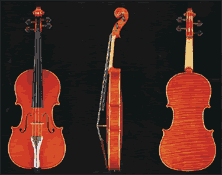
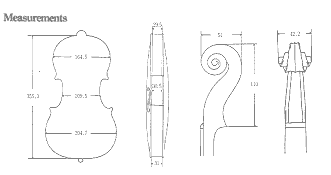
The early years in Japan was a time when it was financially unfeasible for an artist, or for that matter an orchestra, to obtain string instruments of exceptional quality.
As the years progressed, values rose and there began to form a void between those who could afford a fine instrument and those who needed a quality violin.
Shirakawa Sogyo was founded in 1961 to provide these artists with an alternative to the old Italian violins and French bows that, until then, were the only instruments of any quality really available.
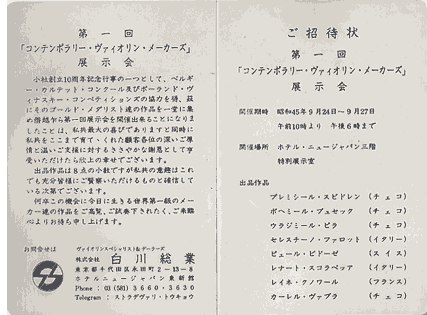
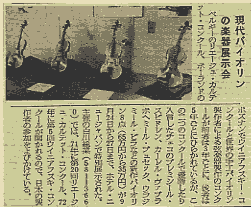
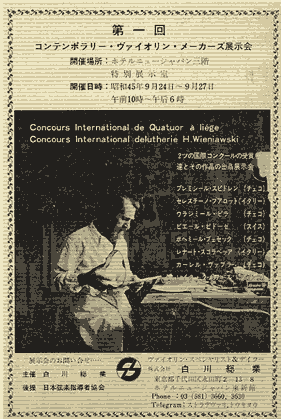
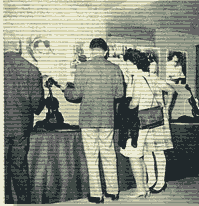
We offered new quality violins from various violin makers and since 1968, have held nine exhibitions for contemporary violin makers. We believe exhibitions, have developed and enlightened the works of other makers. We are proud to say, because of these exhibitions, we feel, the fine works of these and other contemporary makers will undoubtedly benefit our descendants well into the 21st century.
In commemoration of the 30 years since our establishment, we would like to showcase eleven makers who we feel epitomize the art of contemporary, violin making. Selecting these makers was a difficult task considering the number of top manufacturers, however, their works stood the scrutiny of meticulous customers who demanded excellence, and though only one piece could be imported at times, it was always of superb quality.
We would like to recognize here, the loyal and tireless efforts of the late Mr. Takeshi Nemoto, who as a member of our company since its inception, strived to promote the fine works of contemporary artists for many long years. His passing before the completion of this album is especially regretful. May his soul rest in peace knowing his work was not in vain.
We would also like to express our extreme gratitude to Mr. Shinichi Yokoyama, without whose experience and cooperation towards us and the various manufacturers involved, this album’s completion would be questionable.
Shirakawa Sogyo Co.,Ltd.
Kanji Shirakawa
Copyright 1990 (c) Shirakawa Sogyo Co., Ltd.
Photographer Shinichi Yokoyama
Translation Dennis T.Sato / Reginald Williams

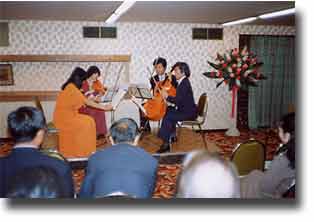
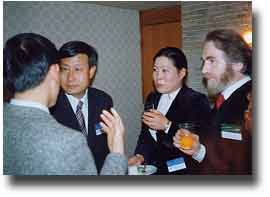
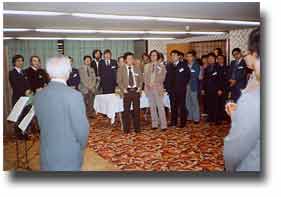
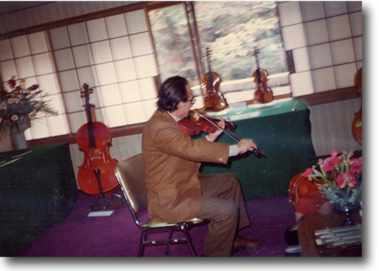
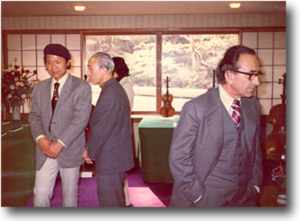
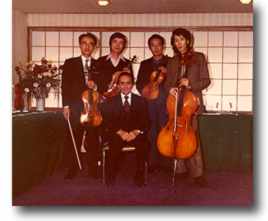
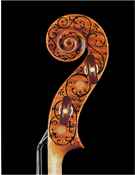 Antonio Capela was born in 1932, in Anta, Portugal as the eldest son of Domingo Capela, a world renown violin maker and repairer. Antonio received a scholarship in 1961 while learning manual skills from his father, and went to work under the well known French lutier Etienne Vatelot. After a four month stay in Mirecourt, he studied at the International School of Violin Making in Cremona, under the guidance of Sgarabotto and Sacconi from 1964 to 1965. His violins won first prize in 1965 and 1969 in Cremona and in 1972 in Poznan, Poland.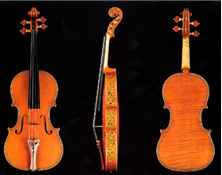
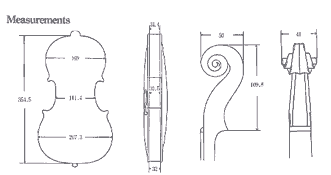
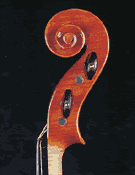 Giorgio Scolari was born in 1952 in Castelnuovo del Zappa (Cremona). He was a student of G. B. Morassi and P. Sgarabotto, at the International School of Violin Making where he graduated in 1970. He worked with Morassi until 1976 and then opened his own workshop. He is also Vice President at the school where he has been teaching since 1972. He models his work after the classical Cremonese school style and uses a varnish of orange-yellow red color. The following is his message: